
Tile Buying Guide
Choose tile by matching the material, the ratings and the size to the room before you pick a color. Porcelain tile suits floors, baths and busy kitchens, ceramic tile suits walls and light-traffic rooms, and glass and mosaic tile add detail to backsplashes and shower floors. Check the wear class, the wet slip rating and the shade lot on every box.
In this guide
- How to choose tile
- Porcelain tile: what makes it porcelain
- Ceramic vs porcelain tile
- Glass tile for backsplashes and walls
- What tile is good for a kitchen backsplash
- Wood-look tile: layout and offset
- Mosaic tile for shower floors and accents
- Tile ratings explained: PEI, absorption, DCOF
- Tile size, layout and grout joints
- How much tile to order
- How to clean and care for tile
How to choose tile
To choose tile, list every surface it will cover, whether floor, wall, shower or backsplash, and match each one to a material whose ratings fit that use. Confirm the wear class, water absorption and wet DCOF on the spec sheet. Then settle the size, layout and grout, and order everything from one lot with extra for cuts and repairs.
Start with the job the tile has to do. A floor needs wear and slip ratings that suit its foot traffic and how often it gets wet. A wall or backsplash carries no foot traffic, so looks, cleaning and how the surface handles splashes matter more.
Next, pick the material. Porcelain tile is the dense, low-absorption choice for floors, baths and entries. Ceramic tile works well on walls and in light-traffic rooms. Glass tile brings shine and color to backsplashes and accent strips. Mosaic sheets suit curves, niches and sloped shower floors, and wood-look porcelain gives the look of planks without the worry about water that real wood brings.
Then read the spec sheet: the abrasion class, the water absorption and the wet DCOF. The ratings section below explains each one in plain words, including why a box may still say PEI.
Last, plan size, layout and grout with your installer, and count the boxes before the order is placed. In the showroom, compare sample pieces side by side under real light, next to your cabinet and countertop samples. MSI is one of the tile brands we carry.
All tile · Porcelain tiles · Ceramic tiles · Glass tiles · Backsplash tile · Wood-look tiles · Mosaic tiles · MSI tile and stone · Brands in the showroom · Book a showroom visit
Porcelain tile: what makes it porcelain
Porcelain tile is the densest common tile body. The Tile Council of North America says standards define porcelain as impervious tile that absorbs 0.5% of water or less under the ASTM C373 test. That low absorption is why porcelain tile suits floors, bathrooms, entries and kitchens that see spills and heavy cleaning.
Not every box labeled porcelain passes that test. The Tile Council of North America points to the PTCA mark, from the Porcelain Tile Certification Agency, as proof that a product is genuine porcelain.
Under that program, makers can send their tile out for independent testing against the 0.5% absorption limit. Ask to see the mark, or the maker's test data, when a label makes a claim you want to confirm.
Porcelain comes glazed, with a printed or colored face, or through-body, with the color running all the way through. Ask your installer which saw and blades the porcelain you pick calls for.
Ceramic vs porcelain tile
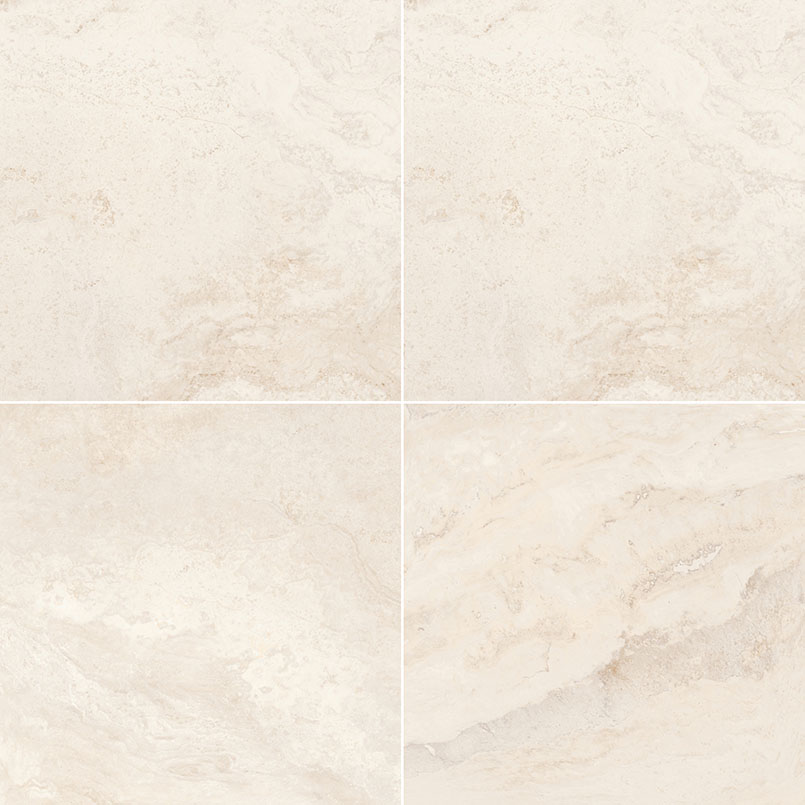
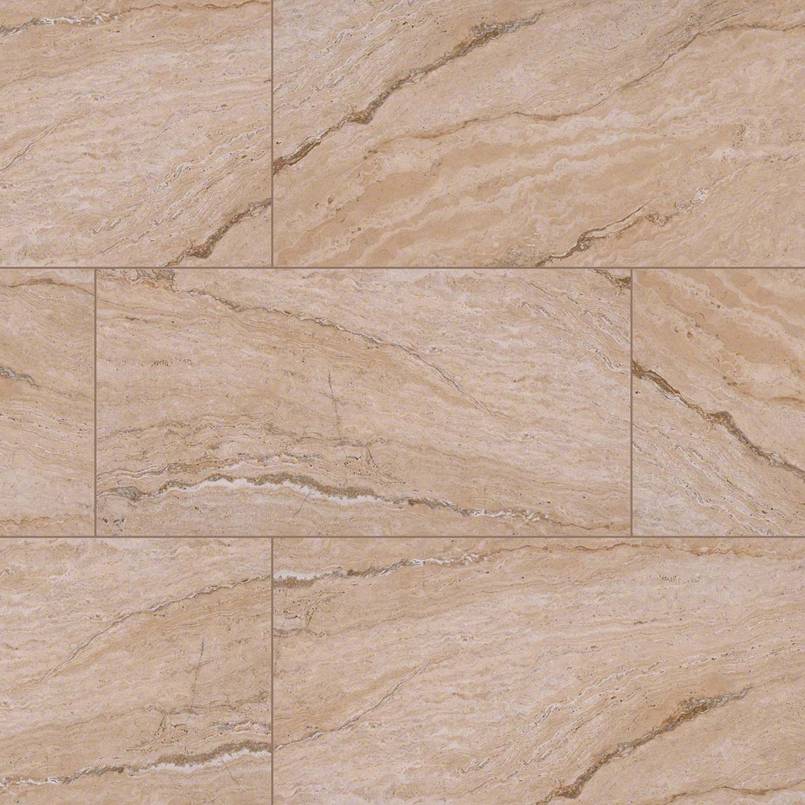
Ceramic tile is fired clay like porcelain, but MSI notes that ceramic uses a less refined clay that is fired at a lower heat. Glazed ceramic tile fits walls, backsplashes and floors that stay dry and see light traffic. Before you put ceramic tile on a floor, check its water absorption and wear class on the spec sheet.
Any tile that absorbs more water than the porcelain limit counts as non-porcelain. The glaze gives the face its color, while the body underneath takes in more water than porcelain does. A chip also shows the lighter body color under the glaze.
Choose ceramic tile for a bathroom wall, a laundry room backsplash or a decorative feature where foot traffic is light. For a floor, check its abrasion class first; the ratings section explains which class suits a home floor.
| Porcelain tile | Ceramic tile | Glass tile | |
|---|---|---|---|
| Body | Dense, refined clay | Less refined clay, lower firing heat | Glass |
| Water absorption | 0.5% or less (TCNA) | More than porcelain | Non-porous face |
| Common uses | Floors, baths, entries, kitchens | Walls, backsplashes, light-traffic floors | Backsplashes, accents, walls |
| Watch for | The PTCA mark | Wear class on floors | Smudges near the cooktop |
Glass tile for backsplashes and walls
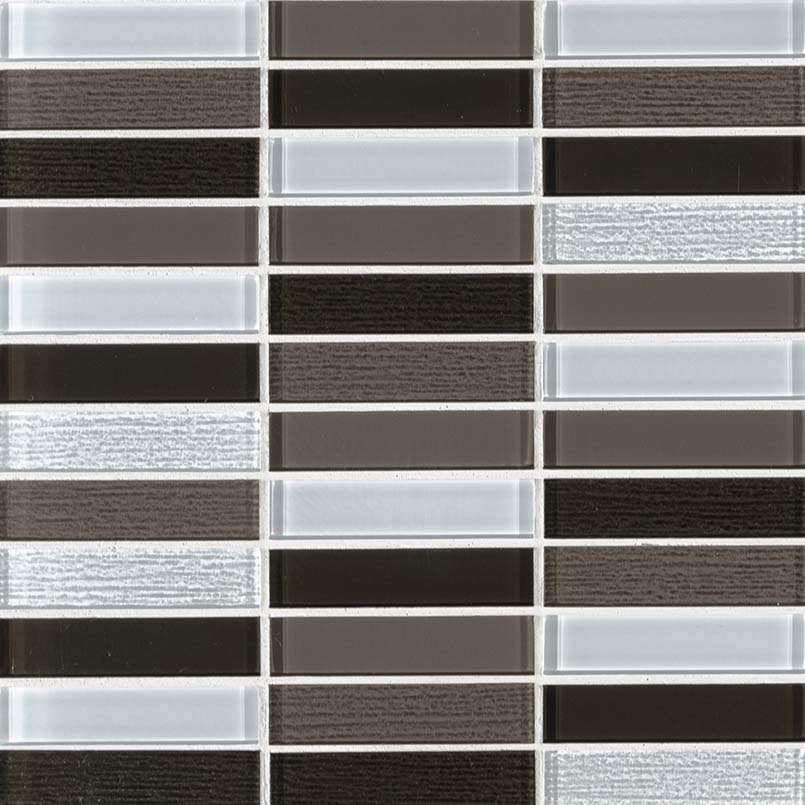
Glass tile adds shine and depth to a backsplash or accent wall, but it asks more of the installer than ceramic or porcelain. Tile Council of North America guidance calls for full coverage of setting material behind translucent glass and names white as the common choice, so trowel lines and dark thinset do not show through the face.
Bedrosians' glass tile instructions, which cite the TCNA Handbook, set a minimum grout joint of 1/16 inch for every glass job. The same instructions rule out setting glass straight onto a wood surface.
Glass looks most even when the installer mixes pieces from several boxes. On a cooking wall, MSI points out that shiny glass near a busy cooktop picks up fingerprints, smudges and water marks, so expect to wipe it often.
What tile is good for a kitchen backsplash
Porcelain tile is a strong choice for a busy kitchen backsplash: MSI calls porcelain the most durable backsplash option, since it absorbs 0.5% of water or less, stands up to heat and scratches, and never needs sealing itself. Ceramic and glass backsplash tile work well too, with trade-offs in cleaning and installation.
Ceramic tile is a common backsplash choice because a wall carries no foot traffic. Glass gives the most shine but shows smudges near the stove, as the glass section explains.
Grout is often the weak spot on a backsplash. Narrow joints and a stain-resistant grout cut down the lines that collect cooking grease. Plan where the tile stops, whether at the cabinet underside, at the hood or across the full wall, and how the edges finish, with trim pieces or a clean factory edge.
Bring a cabinet door sample and a countertop sample when you choose backsplash tile, and look at all three together. The showroom has porcelain, ceramic, glass and mosaic options to compare side by side.
Wood-look tile: layout and offset
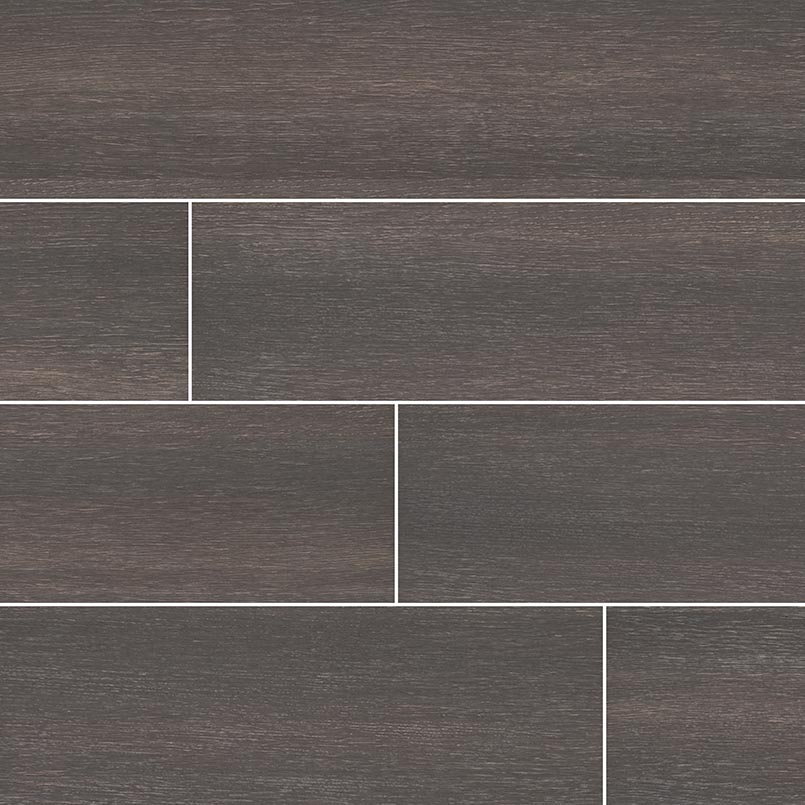
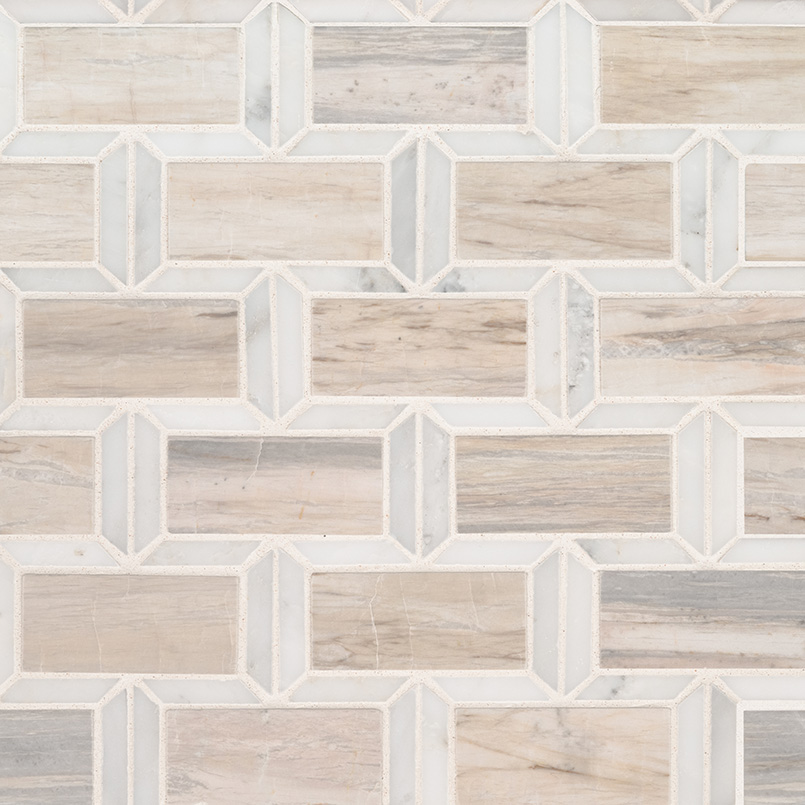
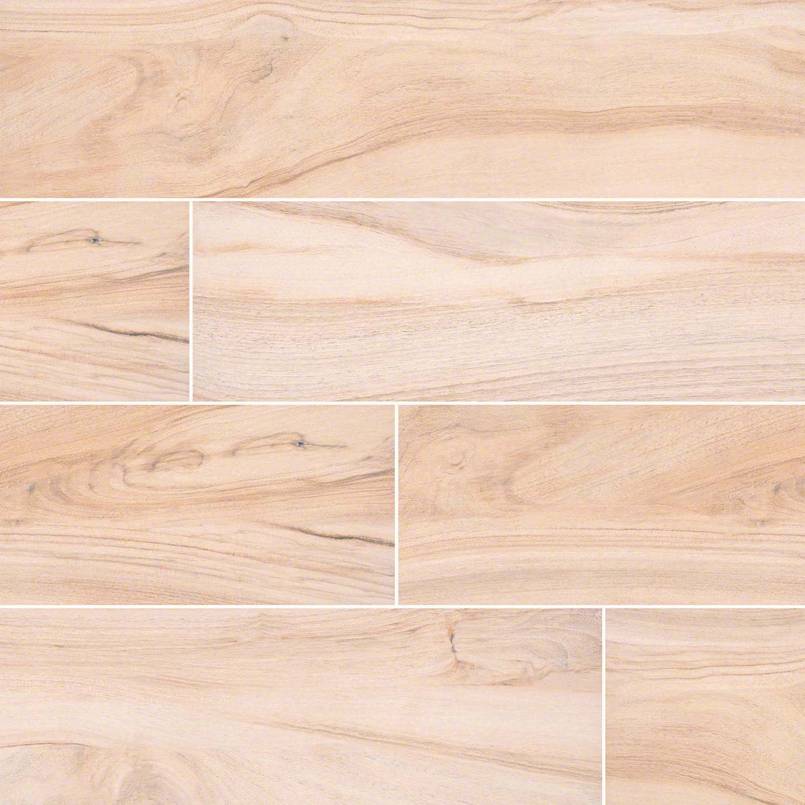
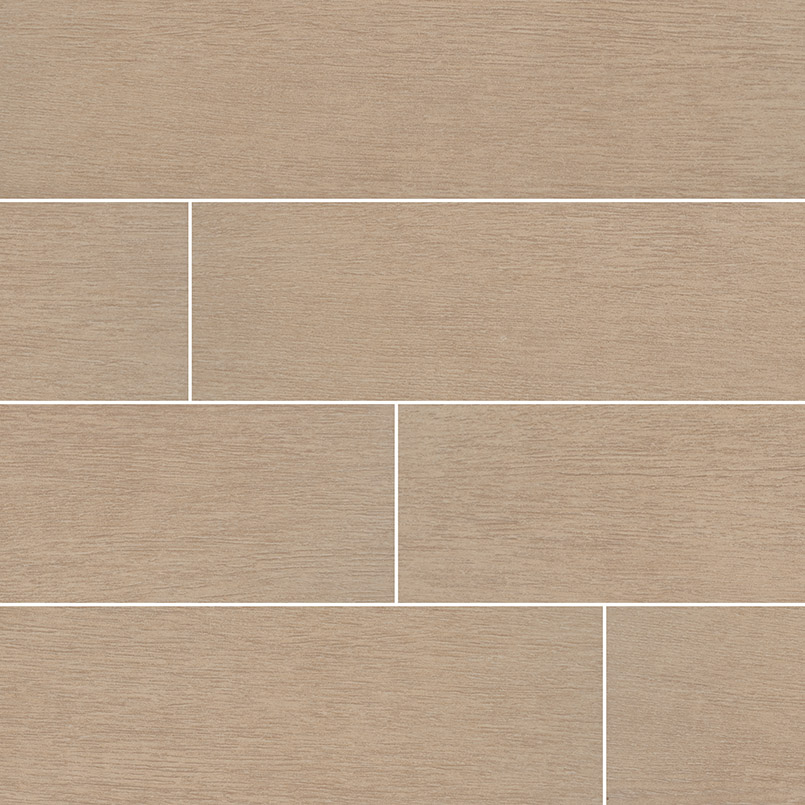
Wood-look tile is porcelain made in long planks with a printed grain, so it gives the look of a wood floor in kitchens, baths and basements where real wood can suffer from water. The plank shape changes how it must be laid: MSI recommends shifting each row by one-third and keeping joints even to limit lippage.
Lippage is the height difference where two tile edges meet. MSI explains that a 50% offset makes it worse on planks, because the slightly thinner end of one plank lands against the thicker middle of the next. MSI advises a one-third offset instead.
MSI's guidance for rectangular tile is an offset of 1/3 or more, with a 1/8 grout joint for rectified tile and a 3/16 joint for non-rectified tile. Rectified tile has squared, precisely sized edges, which is what makes the thinner joint possible.
Ask how many different face prints a wood-look line has, and have the installer mix planks from several boxes so the same grain does not repeat side by side.
Mosaic tile for shower floors and accents
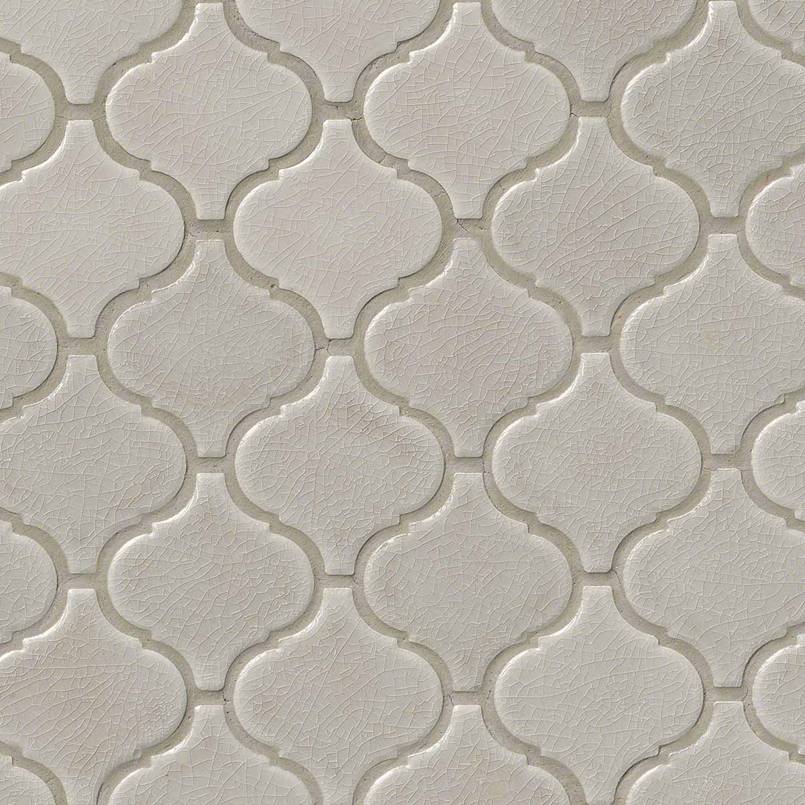
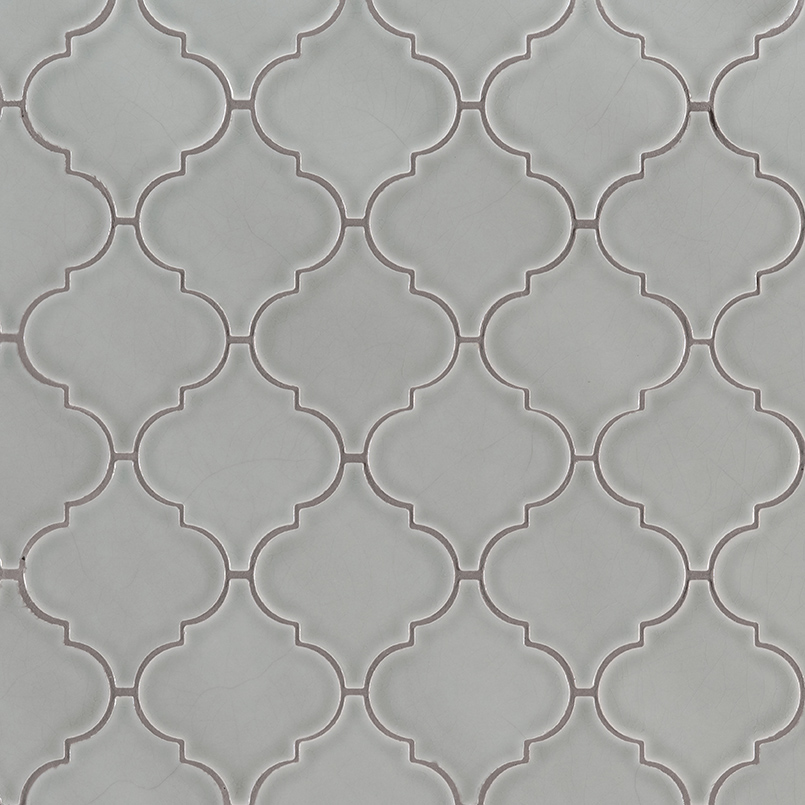
Mosaic tile is small tile sold on mesh-backed sheets. MSI counts any tile of 2” x 2” or less, factory-set on 12” x 12” mesh sheets, as mosaic. The sheets bend around curves and settle into sloped shower floors, niches and accent bands where large tile cannot follow the shape of the surface.
Small mosaics are a common shower floor choice. MSI notes that small mosaics give a floor more grout lines, and those lines add grip where the floor slopes to a drain. Grip still depends on the tile's own surface, so check its wet DCOF too; the ratings section explains why there is no single shower-floor number.
MSI's grout rule for mosaics follows the joint width: unsanded grout for joints narrower than 1/8 inch, and sanded grout once joints reach 1/8 inch or wider.
Because a mosaic floor has far more grout than a large-tile floor, grout color and grout care matter more. Look at grout color samples next to the tile, and ask about a stain-resistant grout for a shower floor.
Tile ratings explained: PEI, absorption, DCOF
Tile ratings tell you where a tile can go. Three ratings matter most: the abrasion class for wear on glazed floor tile, water absorption for how dense the body is, and wet DCOF for slip resistance. Ask for the spec sheet, because a box label alone may use older or informal names for the same tests.
Abrasion class. The Tile Council of North America explains that glazed tile is rated from 0 to 5 in an ASTM wear test, and that the result is often wrongly called a PEI rating, after the Porcelain Enamel Institute. Many stores still print PEI, so read it as the same scale. TCNA says class 3 is typical for most interior home areas and class 4 for most commercial spaces.
Water absorption. Absorption shows how much water the tile body takes in. The Tile Council of North America puts the porcelain line at 0.5% or less; tile above that line is non-porcelain and absorbs more. Low absorption matters most on floors and walls that stay wet.
Wet DCOF. Dynamic coefficient of friction measures slip resistance on a wet surface. The ANSI standard for tile slip resistance, as the Tile Council of North America summarizes it, calls for a wet DCOF of 0.42 or greater on level interior floors expected to be walked on when wet, and the standard names home kitchens and bathrooms among those floors.
That figure is a minimum for level floors, not a shower-floor rule. The same ANSI standard sets no single DCOF limit for shower floors and does not rule out tile below 0.42 where it suits the space. A tile's grip also changes over time with wear and with residue on the surface, so cleaning matters as much as the rating.
| Rating | What it measures | What to look for |
|---|---|---|
| Abrasion class (often called PEI) | Surface wear on glazed tile, on a 0 to 5 scale | Class 3 for most home floors (TCNA) |
| Water absorption | How much water the tile body takes in | 0.5% or less means porcelain (TCNA) |
| Wet DCOF | Slip resistance on a wet floor | 0.42 or greater for level interior wet floors (ANSI, via TCNA) |
| Shade class | Color and tone variation from piece to piece | V0 for uniform, up to V4 for very varied (Ceramic Tile Foundation) |
Tile size, layout and grout joints
Tile size drives the layout, the grout width and how flat the floor must be. Larger tile means fewer grout lines but needs a flatter subfloor and a careful offset, while smaller tile follows slopes and curves. Choose the size with your installer, then confirm the grout joint and offset the tile maker allows.
Flatness first. The Ceramic Tile Advisor, quoting the ANSI installation standard, says tile with any edge of 15 inches or more needs a substrate that varies no more than 1/8 inch in 10 feet. Sources differ on the size at which tile counts as large format, so go by the edge length the standard names.
Grout joints. The Ceramic Tile Foundation, quoting the same standard, sets minimum joints of 1/8 inch for rectified tile and, on average, 3/16 inch for calibrated tile. No grout joint may be narrower than 1/16 inch. Tight joints look clean, but only tile with very even edges can go that narrow.
Offset. In a running bond, where each row shifts against the next, the Ceramic Tile Foundation caps the offset for large tile at 33% unless the tile maker allows more. Sources differ on the tile size where this cap begins, so the rule depends on the edition of the standard your installer follows and on the maker's instructions.
Grout type. Sanded grout fills wider joints, and unsanded grout suits narrow joints. Ask about a stain-resistant grout for kitchens and showers.
How much tile to order
Tile orders should cover the measured area plus an extra margin for cuts, breakage and later repairs, all from one production lot. The size of that margin depends on the room shape, the tile size and the pattern. Diagonal and herringbone layouts use up more tile than straight ones, and a few spare boxes make later repairs easier.
Measure each area separately and add the margin to each. Plan a modest extra share for a simple room and a larger one for diagonal patterns, many cuts or large tile that breaks easily. Keep a few unopened boxes after the job, because a later repair is far easier with tile from the same lot.
Shade variation. The Ceramic Tile Foundation explains that tile shade classes run from V0, with no shade range most people can see, up to V4, where color and tone can differ widely from piece to piece. Check the class on the sample before you buy, and expect the finished floor to look as varied as the class says.
One lot, blended. Ask for the whole order from one lot, with matching shade codes on every box. Bedrosians' installation instructions tell installers to blend tile from several boxes for an even spread of color. The Ceramic Tile Advisor adds that the buyer must confirm the delivered tile is acceptable before installation starts, because tile that is already set is costly to replace.
How to clean and care for tile
Tile care is simple: sweep up grit, wipe spills and use a mild cleaner. MSI's porcelain guide treats plain water as the default and, when more is needed, points to a pH-neutral cleaner that leaves the finish alone. Grout needs the most attention, so seal cement grout and clean it on a regular schedule.
The Tile Council of North America notes that grout sealer can be reapplied once a year and that strong cleaners are meant for occasional use only.
MSI advises skipping cleaners with bleach, ammonia, wax, oil-based ingredients, sealants or abrasives on wood-look porcelain. Residue from the wrong cleaner can dull the surface and, as the ANSI slip standard notes, wear and surface contaminants change a floor's grip over time.
Glass tile and glossy porcelain show water spots, so dry them with a soft cloth after cleaning. Ask for the care sheet for any tile you buy, and follow it over general advice.
Questions people ask
What is the difference between porcelain and ceramic tile?
Porcelain tile is denser than ceramic tile: the Tile Council of North America defines porcelain as tile that absorbs 0.5% of water or less. Ceramic tile uses a less refined clay fired at lower heat, per MSI, and it suits walls, backsplashes and light-traffic floors that stay dry.
What floor tile is good for a bathroom?
Porcelain tile with a wet DCOF of 0.42 or greater is a sound choice for a bathroom floor, because the ANSI slip standard, as TCNA summarizes it, lists home bathrooms among level floors walked on when wet. On a sloped shower floor, small mosaic tile adds grip through extra grout lines.
What tile works for a kitchen backsplash?
Porcelain, ceramic and glass tile all work on a kitchen backsplash. MSI favors porcelain for busy kitchens because it absorbs very little water, handles heat and needs no sealing. Ceramic suits a wall with no foot traffic, and glass adds shine but shows smudges near the cooktop.
What does a PEI rating mean on tile?
A PEI rating on tile is an informal name for the abrasion class from an ASTM wear test, scored from 0 to 5. The Tile Council of North America calls the PEI label a common mistake but uses the same scale, with class 3 typical for home floors and class 4 for most commercial spaces.
Is wood-look tile good for a kitchen?
Wood-look tile works well in a kitchen because it is porcelain, so spills and mopping do not harm it the way they can harm real wood. Ask the installer to offset the planks by one-third, as MSI advises, to limit uneven edges where planks meet.
How much extra tile should I order?
Order extra tile beyond the measured area to cover cuts, breakage and future repairs, and keep a few spare boxes. The right margin depends on the room shape, the tile size and the pattern. Order more for diagonal layouts, large tile and rooms with many corners, and buy everything from one lot.
Does porcelain tile need to be sealed?
Porcelain tile itself usually needs no sealing; MSI says porcelain tile itself never needs sealing. Cement grout is different, and the Tile Council of North America notes that grout sealer can be reapplied each year. Follow the maker's care sheet for any exceptions.
What size grout line should I use for tile?
Tile grout lines should be at least 1/8” for rectified tile and, on average, at least 3/16” for calibrated tile, under the ANSI installation standard the Ceramic Tile Foundation quotes. No tile joint may go below 1/16”, and the tile maker's instructions can call for more.
Is glass tile hard to install?
Glass tile takes more care than ceramic or porcelain tile. Translucent glass needs full coverage of setting material, and TCNA guidance names white as the common choice. Bedrosians' instructions call for joints of at least 1/16 inch. Glass should never be set directly on wood.
Is mosaic tile slippery in a shower?
Mosaic tile usually grips better on a shower floor than large tile, because, as MSI notes, more grout lines add friction on a floor sloped to a drain. The ANSI slip standard sets no single DCOF limit for shower floors, so check each tile's surface rating as well.
See these materials in person
Visit our Ridgefield showroom
Start with a design consultation
Meet a designer in our Ridgefield, New Jersey showroom or at your home.
Showroom Hours
Monday–Saturday 9:00 AM – 5:30 PM
Sunday closed