
Kitchen Cabinet Buying Guide
Choose kitchen cabinets by settling three things in order: the tier (stock, semi-custom or custom), the box construction, and the door style and finish. Stock cabinets suit standard layouts and tight schedules, while semi-custom and custom lines add sizes, finishes and time. Check certification, drawer hardware and lead time on every quote before you sign.
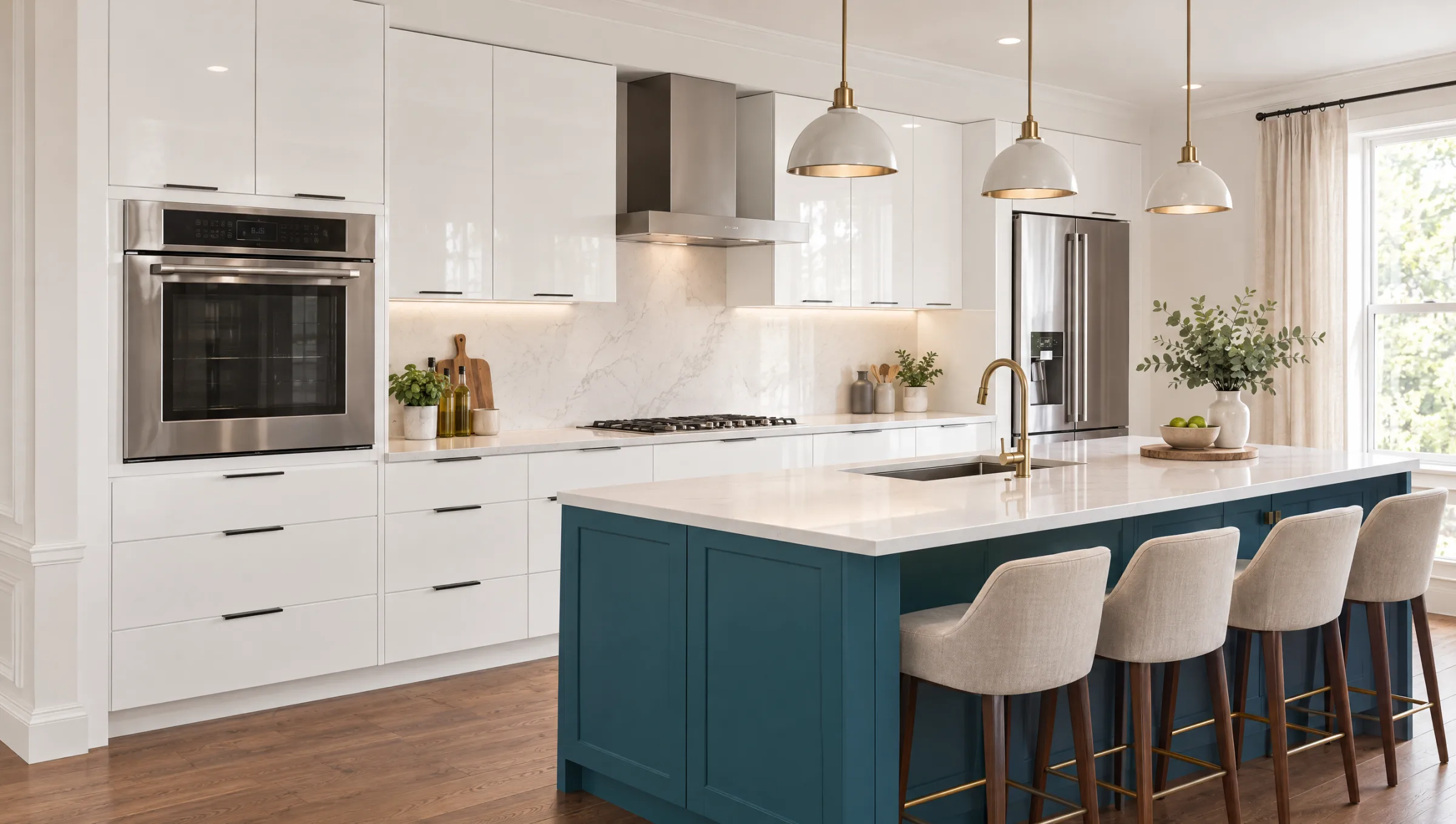
In this guide
- How to choose kitchen cabinets
- Stock cabinets: what you get
- Semi-custom vs custom cabinets
- Cabinet construction: what to check
- Cabinet door styles: shaker, slab and inset
- Painted vs stained cabinets and wood species
- How to measure for kitchen cabinets
- Kitchen cabinet lead times
- How much do kitchen cabinets cost?
- Kitchen cabinet brands in the showroom
How to choose kitchen cabinets
Kitchen cabinets are easiest to choose in four steps: measure the room, pick a tier that fits your layout and schedule, compare box construction line by line, then settle door style and finish. Bring a measured floor plan and photos to the showroom so our team can price two or three lines side by side.
A tape measure settles more than a catalog does. A measured plan shows whether standard box sizes fill each wall or whether fillers and special sizes are needed, and that one answer often decides the tier.
Next, compare what sits inside the box: the side panels, the back, the drawer boxes, the slides and the hinges. Two lines with the same door can differ a lot here, and the spec sheet is where the difference shows.
Our post on the types of kitchen cabinets gives a broad overview of stock, semi-custom and custom cabinets. It also walks through popular door styles such as shaker, beadboard and inset, along with color ideas, so read it before you narrow down lines.
Already have cabinets with sound boxes? Our post on painting kitchen cabinets lays out the job in order: take off doors and hardware, degrease, sand, prime and finish with two coats of a hard-wearing satin or semi-gloss paint. Painting can refresh a kitchen without replacing anything.
| Stock | Semi-custom | Custom | |
|---|---|---|---|
| Sizes | Fixed box sizes, gaps closed with fillers | Standard widths with extra depth and height options | Built to the room |
| Door and finish choice | A set range per line | A wider range of styles, species and colors | Open, including inset and matched finishes |
| Lead time | Usually the shortest | Made to order; varies by line and upgrades | Usually the longest |
| Good fit for | Simple layouts, rentals, tight schedules | Most remodels | Odd sizes, inset doors, special features |
Shop all cabinets · Stock cabinets · Custom & Semi-Custom Cabinets · Types of kitchen cabinets · Can you paint kitchen cabinets? · Shaker style cabinets · Inset cabinets · White oak cabinets · Kitchen measurement · Book a design consultation
Stock cabinets: what you get
Stock cabinets come in a fixed set of box sizes, door styles and finishes from each line's catalog, so the choice is narrower but easy to compare. They suit kitchens with standard wall lengths and ceiling heights. Gaps between boxes are closed with filler strips rather than with boxes made to size.
Stock lines follow standard box sizes. The Latitude Cabinets spec sheet, for example, lists its standard base cabinet as 34 1/2 inches tall without the countertop and 24 inches deep, leaving out the door and drawer fronts. Widths come in fixed steps, so a wall that falls between two sizes gets a filler.
Ask whether the line carries the KCMA certification seal, and read the spec sheet for the box material and the drawer construction. The construction section below explains what each line item means.
Stock cabinets work well when the layout is simple, the schedule is tight or the kitchen is in a rental. They fit less well when walls are out of square, the ceiling height is unusual or the design calls for inset doors.
Semi-custom vs custom cabinets
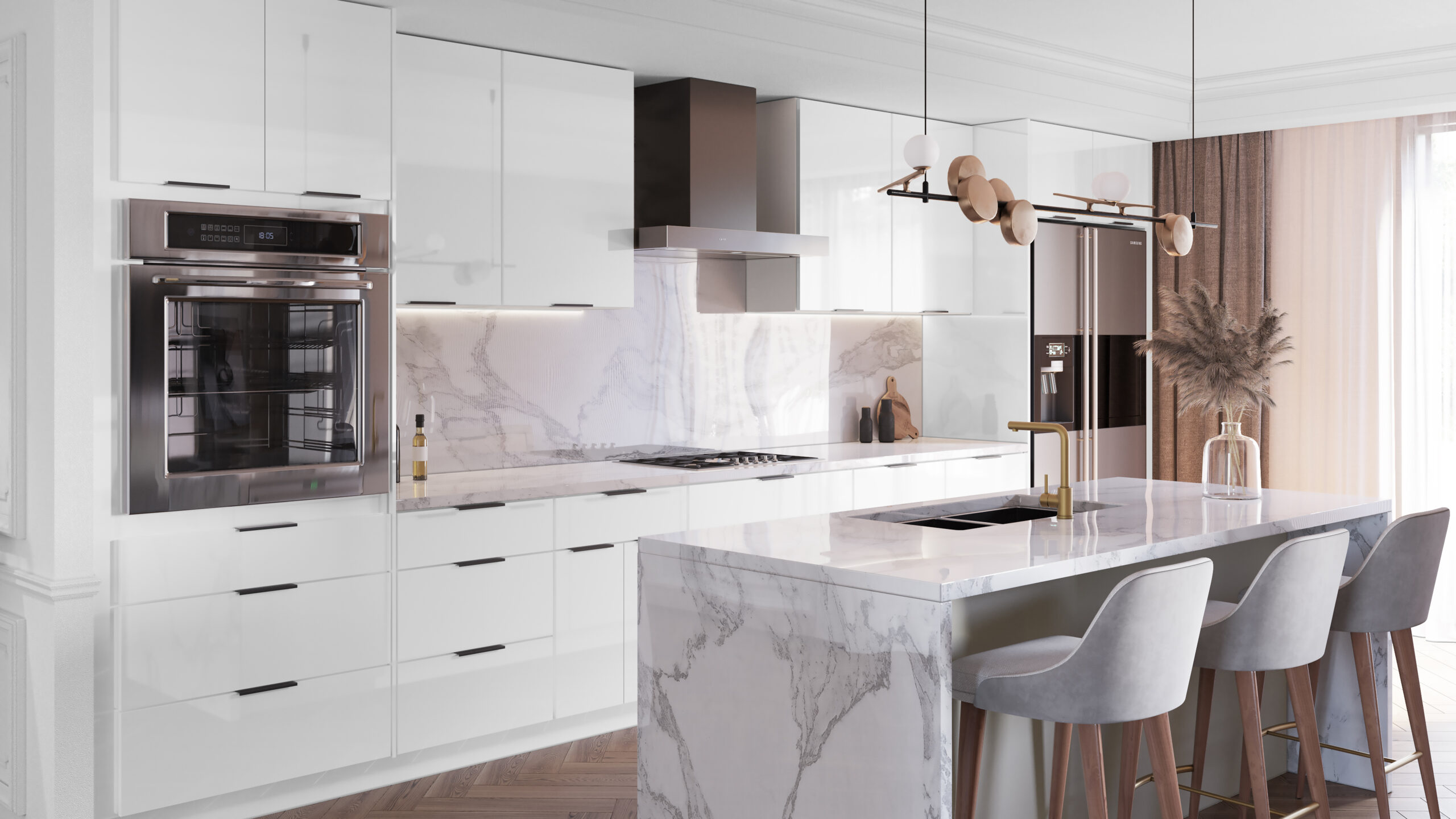
Semi-custom cabinets are built to order from a standard size range with extra depth, height and finish options, while custom cabinets are built to the exact room. KCMA describes semi-custom as built to order inside a defined set of construction rules. Choose custom when the space, door style or finish cannot be met from a line's options.
Fine Homebuilding reports that semi-custom lines are sold in 3-inch width increments, from 9 to 45 inches. Within those widths you can usually change depth and height, pick from a wider finish range and add accessories such as pull-outs.
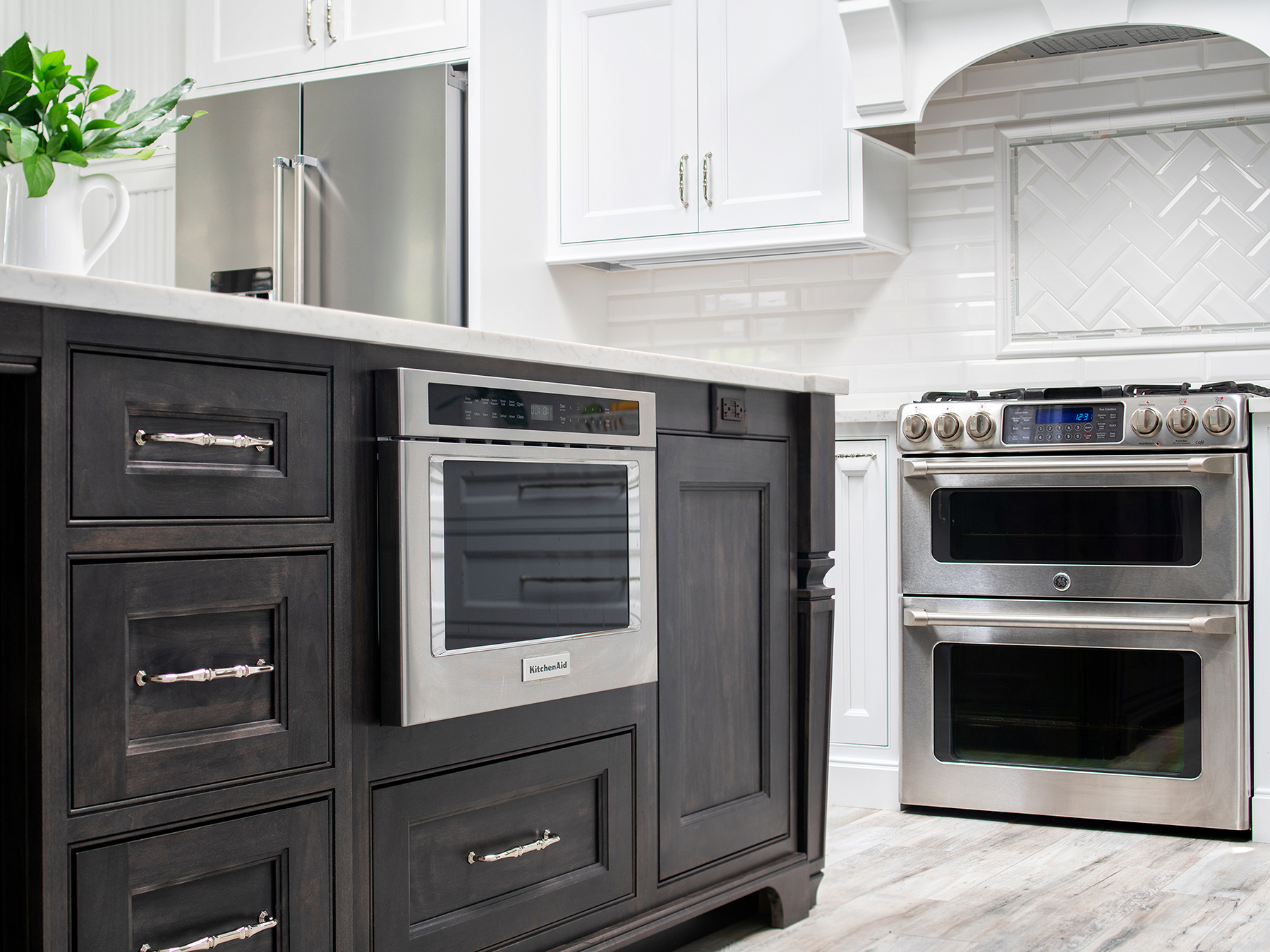
Custom cabinets are sized to the room rather than to a catalog, so they handle out-of-square walls, tall ceilings and unusual appliances without stacks of fillers. They also open up inset doors, specialty species and finishes matched to a sample. The trade-off is a longer build and a higher price.
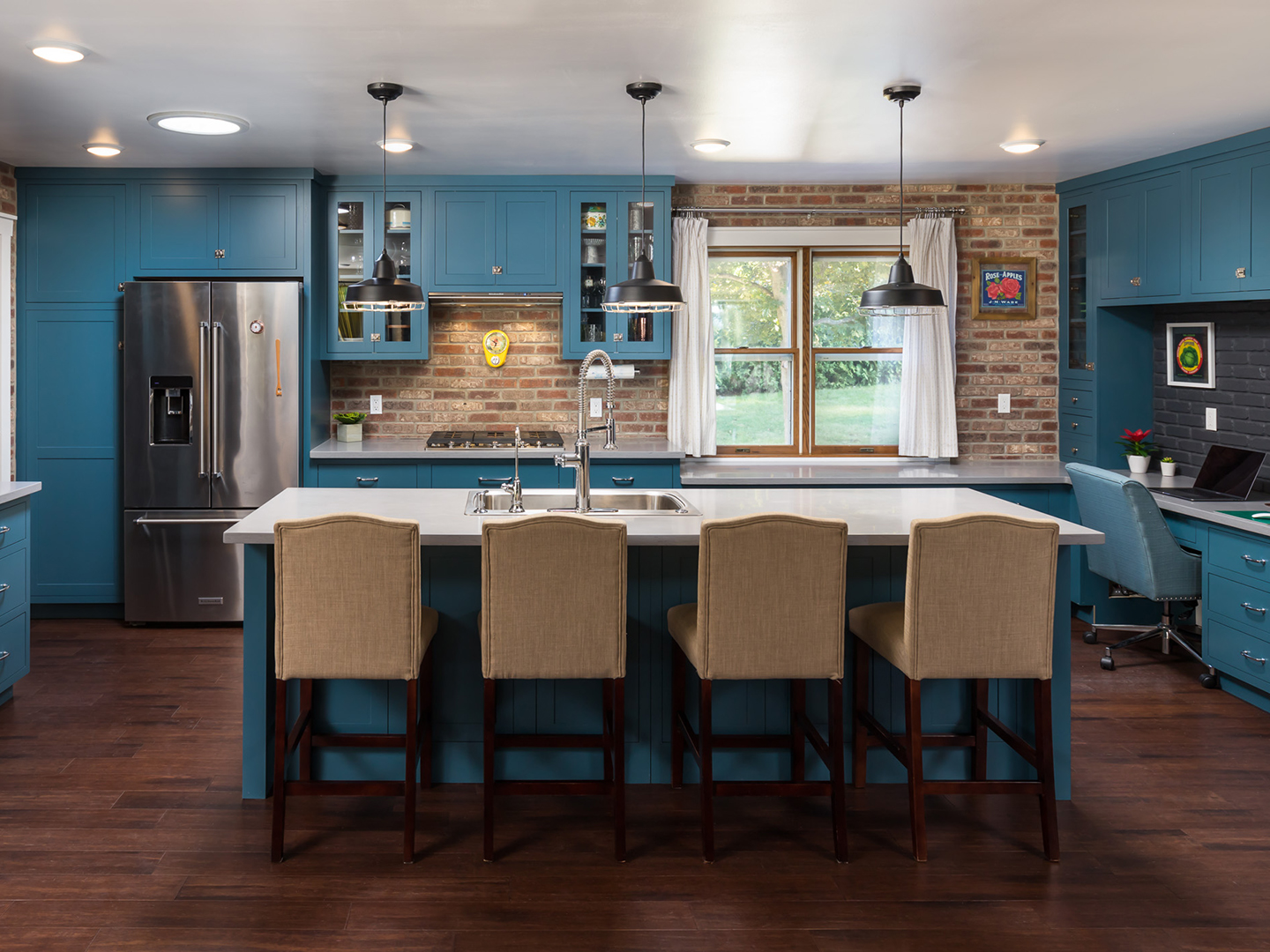
The site groups both tiers under Custom & Semi-Custom Cabinets. Our team can show where a semi-custom line covers your plan and where only a custom build will do.
Custom & Semi-Custom Cabinets · Inset cabinets · Book a design consultation
Cabinet construction: what to check
Cabinet construction comes down to the box material, framed or frameless design, drawer boxes and hardware. KCMA certification is a useful shortcut because certified cabinets pass a set of performance tests on structure, doors, drawers and finish. Read the spec sheet for each line, because construction can change from one line to the next.
Plywood and particleboard are the two common box materials. The USDA Wood Handbook, as quoted by Drafting Millwork, notes that the cross-layered grain of plywood resists splitting, so screws can go in close to a panel edge, and that plywood swells little when it gets wet, unlike most particle-based panels. That matters most in the sink base.
Framed cabinets carry a solid wood face frame on the front of the box; KCMA says that frame is typically 1.5 inches across and three-quarters of an inch thick. Frameless cabinets skip the frame and, in KCMA's description, draw their strength from thicker sides, floors and backs, which leaves full access to the interior.
KCMA's test descriptions show the bar a certified cabinet clears. Doors and drawers are opened and closed 25,000 times, wall cabinets carry a 600-pound load, and a door is loaded with 65 pounds of weight. Drawers are run while holding 15 pounds per square foot. For the finish, a door stays in a heated, humid box for 24 hours, at 120F with 70 percent relative humidity.
Drawers and hinges are where lines differ most in daily use. Look for dovetailed wood drawer boxes on full-extension, soft-close undermount slides; the Latitude Cabinets spec sheet lists that pairing as standard on its Access Drawer. In the showroom, open a drawer and a door and feel how the slide runs and how the hinge softens the close.
Cabinet door styles: shaker, slab and inset
Cabinet door styles start with two common faces: shaker, a plain frame around a recessed center panel, and slab, a single flat panel seen in modern kitchens. The next choice is how the door meets the box: full overlay covers nearly the whole frame, while inset sits flush inside it and needs a framed cabinet.
Shaker doors suit traditional and transitional kitchens alike and take paint or stain well. Slab doors, which cabinet maker Deslaurier describes as flat and frameless, give a clean modern face and are easy to wipe down. Our shaker style cabinets page has more on that look.
Dura Supreme explains that a full overlay door on a framed cabinet laps over the face frame and leaves about 1/4″ of the frame showing, and that frameless cabinets come in full overlay only. An inset door instead sits flush inside the frame opening, so the entire 1 ½″ face frame stays in view.
Inset doors give a furniture-like look but leave only a thin, even gap around each door, so there is little room for error. Cabinets.com notes that doors and drawers can bind and stick when humidity changes; ask how a line handles that before you choose inset. See our inset cabinets page for examples.
Shaker style cabinets · Inset cabinets · Custom & Semi-Custom Cabinets
Painted vs stained cabinets and wood species
Painted cabinets give a solid, even color, while stained cabinets let the wood grain show through. The species matters more under stain, because open-grained oak shows more texture through the finish than maple or cherry. Painted doors can show fine hairline cracks where the door parts meet; ask how a line handles them before you choose paint.
The American Hardwood Information Center names hickory as the hardest hardwood sold commercially, five times harder than aspen. Cabinet maker Deslaurier puts hard maple at roughly 1450 on the Janka hardness scale and red oak a little lower at 1290.
Under stain, grain pattern drives the look. A homeowner guide from Classic Homes notes that open-grained woods such as oak, hickory and alder show more texture through the finish than closed-grained maple or cherry. Ask for a stained sample door in the species you like, because one stain reads differently on each wood.
White oak is a popular stained choice. The American Hardwood Information Center calls it readily available but less abundant than red oak. Our white oak cabinets page shows the look.
Paint hides the grain and gives a uniform color. Dean Cabinetry explains that the hairline cracks that can appear where painted door parts meet are known in the trade as witness lines. Classic Homes also advises letting new cabinets acclimate for 30 to 60 days. To refresh cabinets you already own, our post on painting kitchen cabinets covers the steps.
How to measure for kitchen cabinets
Kitchen cabinets should be ordered from a measured plan that records every wall, window, door, pipe, outlet and appliance. Measure each wall at several heights, note the ceiling height, and mark anything that sticks out. Then check walkway widths against NKBA planning guidelines before you lock in an island or peninsula.
NKBA Kitchen Planning Guidelines call for any walkway to be at least 36″ wide, and where two walkways meet at a right angle, one of them should be at least 42″ wide.
Appliance specs belong in the plan from the start. Bring the model numbers for the range, refrigerator, dishwasher and hood, because a cabinet run is built around their exact widths and clearances.
Our kitchen measurement page covers getting the room measured, so the plan your cabinets are built from matches the walls they go on.
Kitchen cabinet lead times
Kitchen cabinet lead times can be as short as four weeks for a semi-custom line, the figure Fine Homebuilding gives for one line, and upgrades push that to six weeks or more. Custom builds usually take longer. Cabinets also sit early on the project schedule, because the countertop cannot be templated until the cabinets are installed.
Fine Homebuilding names the Canyon Creek Katana line as one semi-custom example: its lead time can be as short as four weeks from the order, and certain upgrades stretch that to six weeks or more. Other lines and busy seasons run longer, so get a written ship date with every quote.
Skyhorse Construction, a contractor, notes that cabinets often sit on a remodel's critical path, since the countertop template has to wait for installed cabinets. Plan the countertop order, plumbing and appliance delivery around the cabinet ship date rather than the other way round.
Order once the plan is final. A change after the order is placed can reset the clock on a made-to-order line.
How much do kitchen cabinets cost?
Kitchen cabinet cost depends first on the tier: HomeAdvisor estimates custom cabinets at two to five times the price of stock or semi-custom lines. After the tier, the number of boxes, the box and drawer construction, the wood species, the finish and the accessories move the price. A quote per line, on the same plan, is the fair comparison.
Size is the first driver: more linear feet of cabinets means more boxes, doors and hardware. Tall pantry units, corner solutions and an island add up faster than a straight run of base and wall cabinets.
Materials and options come next. Plywood boxes, dovetailed drawers, inset doors, white oak and other sought-after species, and painted or glazed finishes each move a line up in price. Pull-outs, organizers and lighting are often priced as extras.
Our cabinet types post, which also covers colors and cost, compares the three tiers and lists the price ranges published when it was written. Use it as a starting point, then ask our team for a quote on your own plan.
Types of kitchen cabinets: design, colors and cost · Book a design consultation
Kitchen cabinet brands in the showroom
Kitchen cabinet brands on display in the showroom include Shiloh Cabinets, Kith Kitchens, St Martin Cabinetry, Fabuwood, Hanssem, Forevermark, Eclipse Cabinetry and FGM Cabinetry. Lines within one brand can differ in construction, door styles, finishes and lead time, so compare lines rather than brand names alone.
Each brand page shows that maker's products on the site. When you compare two brands, line up the same items on each spec sheet: box material, KCMA certification, drawer construction, hinge and slide type, finish options and the quoted lead time.
Price lists and catalogs change often, so ask our team for a current quote on your plan rather than relying on an old PDF.
All brands · Shiloh Cabinets · Kith Kitchens · St Martin Cabinetry · Fabuwood · Hanssem · Forevermark · Eclipse Cabinetry · FGM Cabinetry
Questions people ask
What is the difference between stock, semi-custom and custom cabinets?
Stock cabinets come in fixed sizes and finishes, semi-custom cabinets are built to order from a standard size range with more options, and custom cabinets are built to fit the room exactly. Each step up adds flexibility, time and cost.
Are semi-custom cabinets worth it?
Semi-custom cabinets are worth it when stock sizes leave too many fillers or the finish you want is not offered in stock. Fine Homebuilding notes semi-custom widths run in 3-inch steps, with depth and height changes available, which covers most remodels without a full custom build.
How can you tell if kitchen cabinets are good quality?
Good quality kitchen cabinets show it in the box, the drawers and the hardware. Look for KCMA certification, sturdy box panels, dovetailed drawer boxes and full-extension soft-close slides, then open and close doors and drawers in the showroom to feel how they run.
Is plywood or particleboard better for kitchen cabinets?
Plywood cabinet boxes hold screws near the edges and swell less when wet, according to the USDA Wood Handbook as quoted by Drafting Millwork. Particleboard boxes swell more when wetted, so plywood is the safer pick for the sink base, where leaks are most likely.
What does KCMA certified mean for cabinets?
KCMA certified cabinets have passed the Kitchen Cabinet Manufacturers Association's performance tests covering structure, doors, drawers and finish. KCMA describes door and drawer tests of 25,000 cycles and a 600-pound load on wall cabinets.
Framed vs frameless cabinets: which should you choose?
Framed cabinets suit traditional looks and are the only option for inset doors, while frameless cabinets give fuller access to the interior and a clean, modern face. Dura Supreme notes that frameless cabinets come in full overlay only, so door style often decides the question.
What is the hardest wood for kitchen cabinets?
Hickory is the hardest wood for kitchen cabinets among commercial hardwoods, according to the American Hardwood Information Center, which rates it five times harder than aspen. Deslaurier, a cabinet maker, puts hard maple at roughly 1450 on the Janka scale and red oak at 1290.
Do painted kitchen cabinets crack?
Painted kitchen cabinets can show hairline cracks where the door parts meet, which the cabinet industry calls witness lines, according to Dean Cabinetry. Before you order, ask how the line and its warranty treat witness lines on painted doors.
How long does it take to get kitchen cabinets?
Kitchen cabinets from a semi-custom line can arrive in as short as four weeks, the lead time Fine Homebuilding reports for one line, with upgrades pushing that to six weeks or more. Custom builds usually take longer, so get a ship date in writing.
What size is a standard kitchen base cabinet?
A standard kitchen base cabinet in the Latitude Cabinets spec sheet is 34 1/2 inches tall before the countertop and 24 inches deep, not counting the door and drawer fronts. Widths come in fixed steps, and a filler strip closes any gap left on the wall.
See these materials in person
Visit our Ridgefield showroom
Start with a design consultation
Meet a designer in our Ridgefield, New Jersey showroom or at your home.
Showroom Hours
Monday–Saturday 9:00 AM – 5:30 PM
Sunday closed