
Countertop Buying Guide
To choose a countertop, match the stone to how you cook and how much upkeep you accept: quartz for low care, granite or quartzite for hard natural stone, marble if you accept etching. Then check the slab itself, its thickness, edge, seams and sink cutout before fabrication starts.

In this guide
How to choose a countertop
Choosing a countertop comes down to four questions: how hard you cook, how much upkeep you accept, how much pattern you want, and how you handle heat and acids. Quartz countertops suit busy kitchens that want little care. Granite and quartzite suit cooks who want hard natural stone. Marble suits owners who accept etch marks as part of the look.
Start with how the kitchen is used. If spills sit for hours and hot pans move fast, pick a surface that forgives both. If the pattern matters most, look at full slabs rather than small samples, because natural stone changes from one slab to the next.
Next, compare the four stones side by side in the table below, then read the section for each one. Each stone section links to the products we carry in that material, including MSI stone.
Finally, settle the slab details and the sink before you approve the layout. Thickness, edge shape, seam locations and sink type all change how the finished top looks and how well it holds up. Our team can walk you through slabs in person; book a visit through the consultation page.
All countertops · Granite countertops · Quartz countertops · Quartzite countertops · Marble countertops · Quartz countertops: pros and cons · Quartz vs quartzite countertops · Replacing a sink but keeping the countertop · MSI stone · Book a consultation
Granite vs quartz vs quartzite vs marble
Granite, quartz, quartzite and marble countertops differ most in heat, etching and sealing. Quartz countertops trade natural variation for low care. Granite and true quartzite are hard natural stones that shrug off scratches. Marble etches when acids touch it. Sealing needs for granite and quartzite depend on the slab, so test each one before you decide.
The Natural Stone Institute reminds owners that a sealer makes stone more resistant to stains, not immune to them. Read every claim of easy care as stain resistance, and still wipe spills soon.
Heat ratings depend on the test. Consumer Reports, for example, judges heat damage with a pot of oil heated to 400 degrees F. Cambria says quartzite copes with heat better than quartz, yet still advises a hot pad or solid trivet for both. A trivet is a simple habit on any stone.
Use the table as a starting point. A cell that says the answer depends on the slab means the sources disagree or the result changes from one quarry to the next, so ask to test the actual slab.
| Stone | Heat | Scratches and chips | Stains | Etching | Sealing | Upkeep |
|---|---|---|---|---|---|---|
| Granite | High; no direct heat | Excellent scratch resistance | Depends on slab | Check the slab | Often none; test it | Mild cleaner, water test |
| Quartz | Use a trivet | Edges can chip | Stain resistant | Follow maker care | Not needed | Low; no sealing |
| Quartzite | Better than quartz; trivet | Hard natural stone | Depends on slab | Not from kitchen acids | Test the slab | Mild cleaner, water test |
| Marble | Use a trivet | Avoid abrasives | Seal to resist | Etches with acids | Helps, not a cure | Highest; wipe acids fast |
Granite countertops
Granite countertops are a hard natural stone that resists scratches from kitchen utensils and copes well with warm cookware. The Natural Stone Institute rates granite as heat resistant but warns against direct, focused heat. Whether a granite slab needs sealing depends on the stone, so ask for a water test on the exact slab you choose before it is cut.
The Natural Stone Institute puts granite's heat tolerance at up to roughly 480°F, yet still discourages setting a localized heat source straight on the stone. The same source notes that the minerals in most granites are harder than kitchen utensils, which is why granite shows so few scratches.
Sealing depends on the slab. The Natural Stone Institute says most granite countertops do not need sealing, but granite varies from quarry to quarry, so test the one you choose. Put a few drops of water on it: if the stone darkens within minutes, it absorbs and a sealer will help; if the water beads and the color holds, it may not need one.
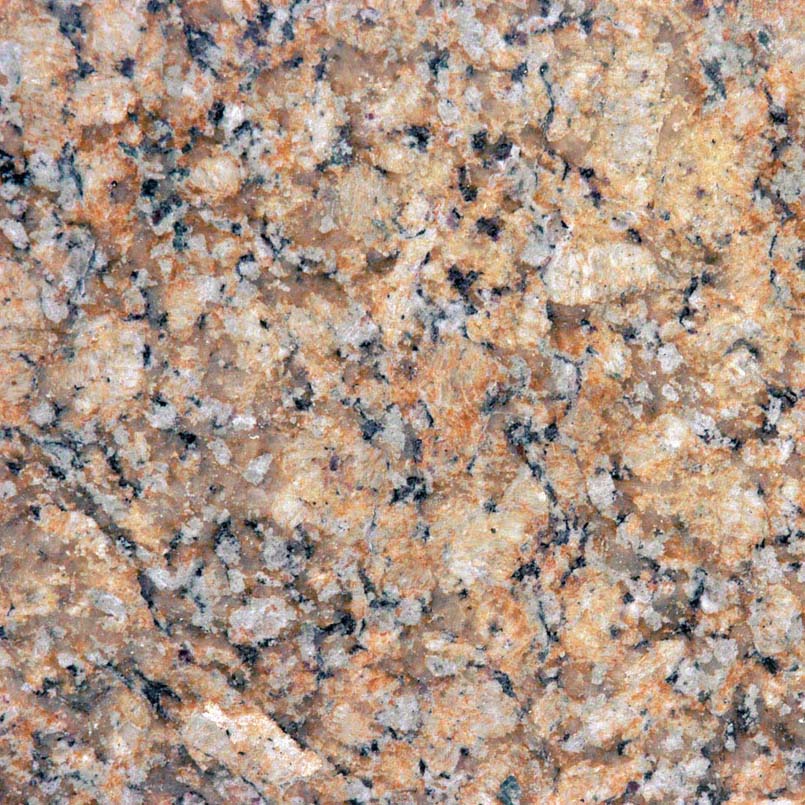
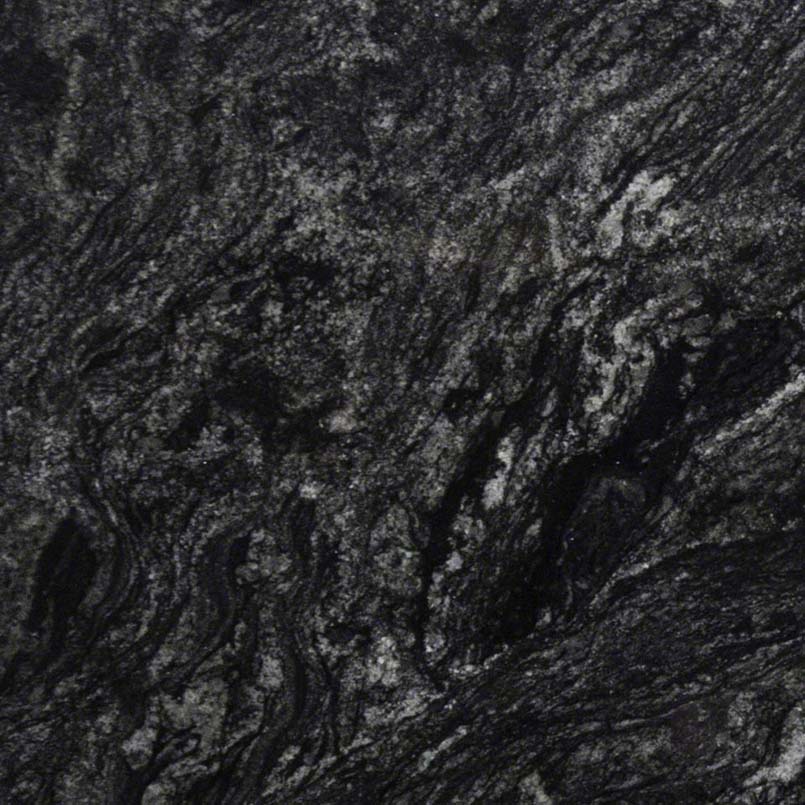
Granite comes in a wide range of colors, from even speckles to bold movement. Look at the full slab, because two slabs sold under the same name can differ.
Quartz countertops
Quartz countertops are engineered from crushed stone bound with resin, so they resist stains and need no sealing. MSI and Cambria both say their quartz never needs a sealer, and Caesarstone recommends a trivet to prevent burns. Quartz countertops suit owners who want a consistent look and little upkeep, as long as hot pans always go on a pad.
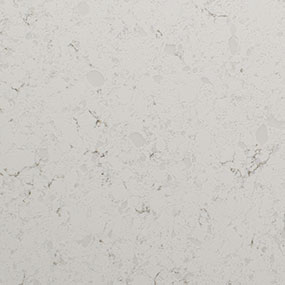
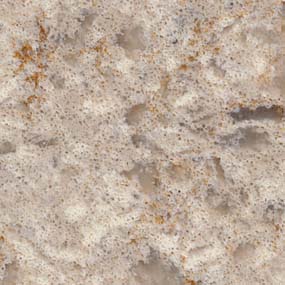
Cal/OSHA describes engineered stone as crushed stone with more than 90% silica held together by a resin. Because quartz is made in a factory, ask to see a full slab or a large sample of the color you want.
The care guide for MSI's Q quartz says there is no need to seal the countertop, and it states that damage from thermal expansion falls outside the Q warranty. Cambria says its quartz never needs sealing, polishing or reconditioning. Read the maker's care guide before you buy, because the heat rules sit inside the warranty terms.
Consumer Reports warns that the edges and corners of quartz can chip, and a chipped edge needs a professional repair. A rounded edge is the safer choice on a busy island.
Our post on quartz countertop pros and cons goes deeper. It covers how engineered quartz is made, why its nonporous surface wipes clean, the range of colors and finishes, and its weak spots with direct heat and long sun exposure. Read it before you settle on a color.
Shop quartz countertops · Quartz countertops: pros and cons · MSI stone
Quartzite countertops
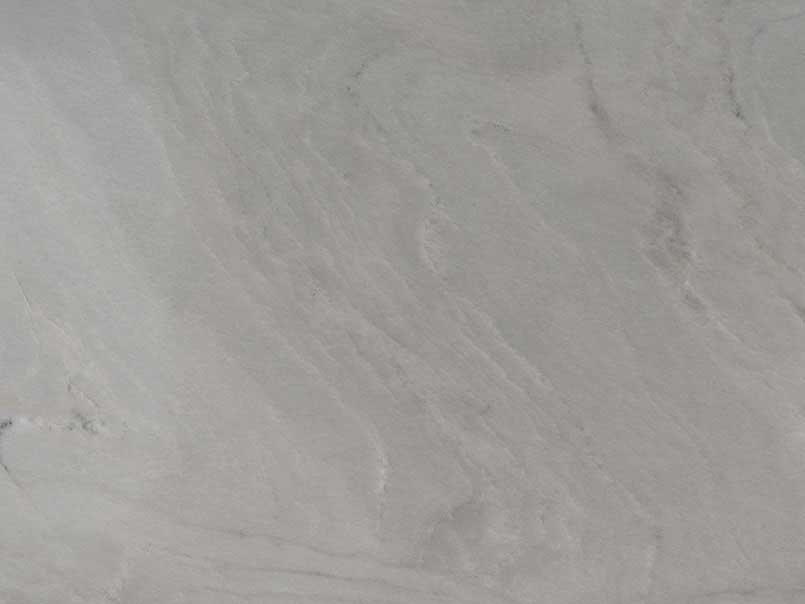
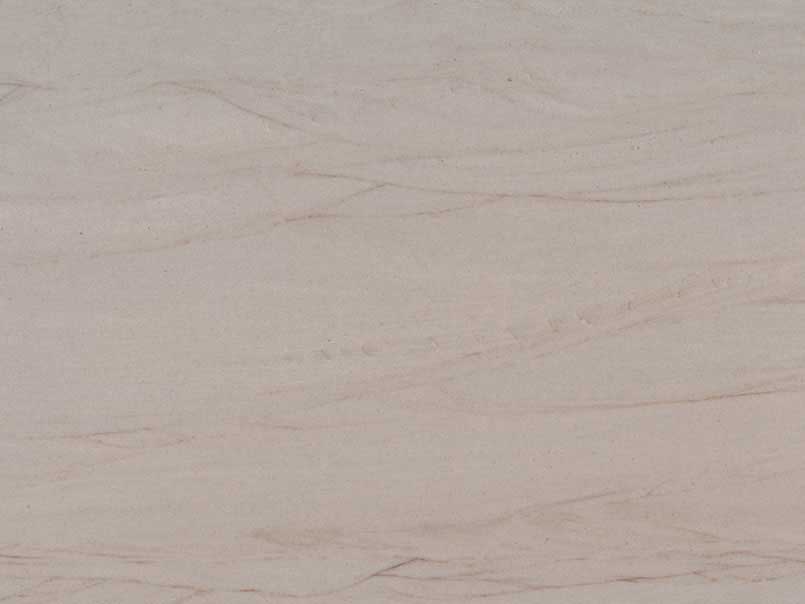
Quartzite countertops are a hard natural stone, and the Natural Stone Institute says true quartzite will not etch from normal kitchen acids. The same source says a soft quartzite does not exist, so a slab sold under that label deserves a closer look. Test any quartzite slab for etching and absorption before you buy it.
The Natural Stone Institute's Use Natural Stone guide to quartzite rates quartz, the mineral, at 7 on the Mohs hardness scale. The same guide says real quartzite will not etch from the acids a normal kitchen sees.
Test before you commit, because the name on a slab is only a starting point. Ask your fabricator for an acid spot test on an offcut of the same slab, and run the water-drop test from the granite section to see whether a sealer is needed.
Our quartz vs quartzite post sets the two side by side. It explains that quartz is engineered in a factory while quartzite forms underground from sandstone, compares how each handles heat and impact, and shows why quartz is easier to pattern-match across a waterfall edge. Read it if you are torn between the two.
Shop quartzite countertops · Quartz vs quartzite countertops · Quartz countertops
Marble countertops
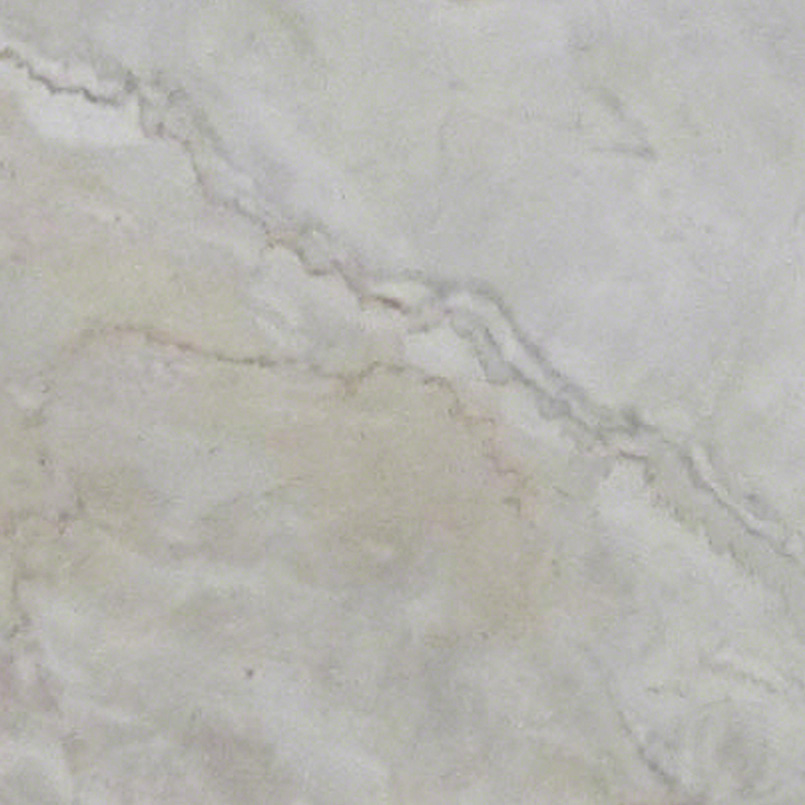
Marble countertops etch when acids touch them, because the calcite in marble reacts with the mild acids common in kitchens. A sealer cuts that risk but does not remove it. Marble countertops suit owners who like a softly worn patina, or who use marble on a baking station, a bath vanity or a low-traffic island.
The Natural Stone Institute explains that the calcite crystal in marble is open to attack by mild acids, including the ones in everyday kitchen and bar use. The Marble Institute of America's consumer guide adds that a sealer lowers that risk but does not remove it.
The same guide notes that a stone dealer may not recommend marble for a kitchen. That is a reason to see the stone and talk through your cooking habits, not a rule against it.
Etching leaves a dull mark rather than a colored stain. If you want marble, decide in advance that some marks are part of the look, and wipe up juice, wine and vinegar quickly.

How to choose a countertop slab
Choosing a countertop slab means settling thickness, pattern, edge, seams and any island overhang before fabrication. Granite slabs come in two standard thicknesses, and the thicker slab allows a longer overhang. See the full slab in person, ask where the seams will fall, and pick an edge profile that resists chips.
MSI lists two standard thicknesses for natural granite: 2cm, about ¾ inch, and 3cm, about 1¼ inch. The thicker slab gives a heavier edge and allows a longer overhang.
For veined stone, ask about bookmatching, where neighboring slabs are opened like a book so the pattern mirrors across a seam. The Natural Stone Institute notes that sequential slabs usually carry numbers, which lets you buy the neighboring ones, and it describes vein-matching, where the pattern carries on across the seam. Reserve every slab you need at the same time.
Edge shape affects chipping. The Marble Institute of America's consumer guide says thin, sharp edge profiles chip more easily than broad, curved ones, and Consumer Reports gives the same advice for quartz. An eased or rounded edge is the safer pick near a sink or on an island corner.
Ask the fabricator to mark the seams on the layout before cutting. The Marble Institute of America advises homeowners to know where each seam will sit and how it changes the look of the stone.
Island overhang limits depend on the stone, its thickness and the support below, and sources differ, so the fabricator sets the final number. Figures from the Natural Stone Institute's Dimension Stone Design Manual, as cited by a countertop fabricators' association, limit the overhang to 6" for 3/4" (20 mm) stone and 10" for 1-1/4" (30 mm) stone. The Marble Institute of America adds that the overhanging part should never exceed 1/3 of the countertop's width.
Undermount vs drop-in sinks
Undermount and drop-in sinks both work with stone countertops. An undermount sink hangs below the countertop for a clean edge you can wipe straight into, while a drop-in sink rests its rim on top and is easier to swap later. Heavy sinks need extra support either way, so plan the sink together with the countertop.
The Marble Institute of America's consumer guide says an undermount sink is either fixed to the bottom face of the stone or held up by a subtop, and that heavy cast iron sinks always need added support whether they mount on top or below.
Swapping a sink while keeping the countertop can work, but the sink type and the stone decide how easy it is. A drop-in sink comes out of its cutout once the clips and caulk are released. An undermount sink is glued and clipped below the stone, so removal takes more care, and the new bowl has to fit the old opening. World Coppersmith, a sink maker, notes that for a flush mount the new sink has to match the old size to less than 1/16 inch.
Results with an undermount sink depend on the stone and on how the old sink was fixed, so have a pro inspect the cutout before you order the new sink.
Our post on replacing a kitchen sink while keeping the countertop walks through the whole job. It explains how drop-in, undermount and farmhouse sinks differ, why measuring the old sink matters, and each step from shutting off the water to checking for leaks.
Replacing a sink but keeping the countertop · Ask our team about your sink
How to care for stone countertops
Stone countertops last longest with mild cleaners, quick spill cleanup and sealing only when the stone needs it. Keep acidic and abrasive cleaners off marble and other calcite stones, keep rust removers away from every stone, and reseal natural stone only when a water test shows it absorbs. Quartz care follows the maker's guide.
The Natural Stone Institute warns that products with lemon, vinegar or other acids can dull or etch calcareous stones such as marble, and that scouring powders and creams often carry abrasives that can scratch some stones. Use a mild, non-acidic cleaner made for stone and a soft cloth instead.
Keep rust removers away from stone. The Natural Stone Institute notes that every stone, granite and quartzite included, is attacked by hydrofluoric acid (HF), an ingredient in some rust removers.
When a natural stone does need sealing, choose a quality product. The Natural Stone Institute says a good countertop sealer should be expected to last ten to fifteen years and should resist both water- and oil-based stains. Repeat the water-drop test now and then, and reseal only when water starts to soak in.
For quartz, follow the maker's care guide; the quartz section above covers sealing and heat.
Questions people ask
Is granite heat resistant?
Granite countertops are heat resistant up to roughly 480°F, according to the Natural Stone Institute. The same source still discourages direct, localized heat on the stone, so set very hot cookware on a pad rather than straight on the granite.
Undermount or drop-in sink: which is better for a stone countertop?
An undermount sink suits a stone countertop when you want a clean edge to wipe into, and a drop-in sink suits owners who may swap the sink later. The Marble Institute of America says heavy cast iron sinks need extra support with either type.
Which countertop edge is least likely to chip?
A broad, rounded countertop edge is the least likely to chip. The Marble Institute of America says narrow, sharp edge profiles chip more easily than larger curved ones, and Consumer Reports advises rounded edges for quartz, since a chipped edge needs a professional repair.
Does quartzite etch?
True quartzite countertops do not etch from normal kitchen acids, according to the Natural Stone Institute's Use Natural Stone guide. The same source says a soft quartzite does not exist, so ask for an acid spot test on an offcut of any slab sold as quartzite.
Do granite countertops need to be sealed?
Granite countertops often do not need sealing, but the answer depends on the slab. The Natural Stone Institute says most granite needs none. Put a few drops of water on the stone; if it darkens quickly, it absorbs and a sealer will help.
Can you put hot pans on quartz countertops?
Hot pans should not go straight onto quartz countertops. Caesarstone recommends a trivet to prevent burning, Cambria advises a hot pad or solid trivet, and the MSI Q warranty does not cover damage from thermal expansion, so a pad is the safe habit every time.
Is marble a good choice for kitchen countertops?
Marble countertops work in a kitchen only if you accept etching. The Natural Stone Institute explains that the calcite in marble reacts to mild kitchen acids. The Marble Institute of America says a sealer reduces that risk without ending it, and notes that a stone dealer may not recommend marble for kitchens.
What thickness should a granite countertop be?
Granite countertops come in two standard thicknesses, 2cm and 3cm, according to MSI. The 3cm slab gives a heavier edge and allows a longer overhang, so choose the thickness together with your island layout and edge profile.
How far can a stone countertop overhang?
A stone countertop overhang is limited to 6" for 3/4" stone and 10" for 1-1/4" stone in Natural Stone Institute design manual figures, as cited by a countertop fabricators' association. The Marble Institute of America caps the overhang at 1/3 of the countertop width, and the final number depends on the stone and its support.
What should you not use to clean stone countertops?
Stone countertops should not be cleaned with acids, abrasives or rust removers. The Natural Stone Institute warns that lemon, vinegar and other acids can etch marble and similar stones, scouring powders can scratch, and hydrofluoric acid in some rust removers attacks even granite and quartzite.
See these materials in person
Visit our Ridgefield showroom
Start with a design consultation
Meet a designer in our Ridgefield, New Jersey showroom or at your home.
Showroom Hours
Monday–Saturday 9:00 AM – 5:30 PM
Sunday closed